SceneForge
Concept
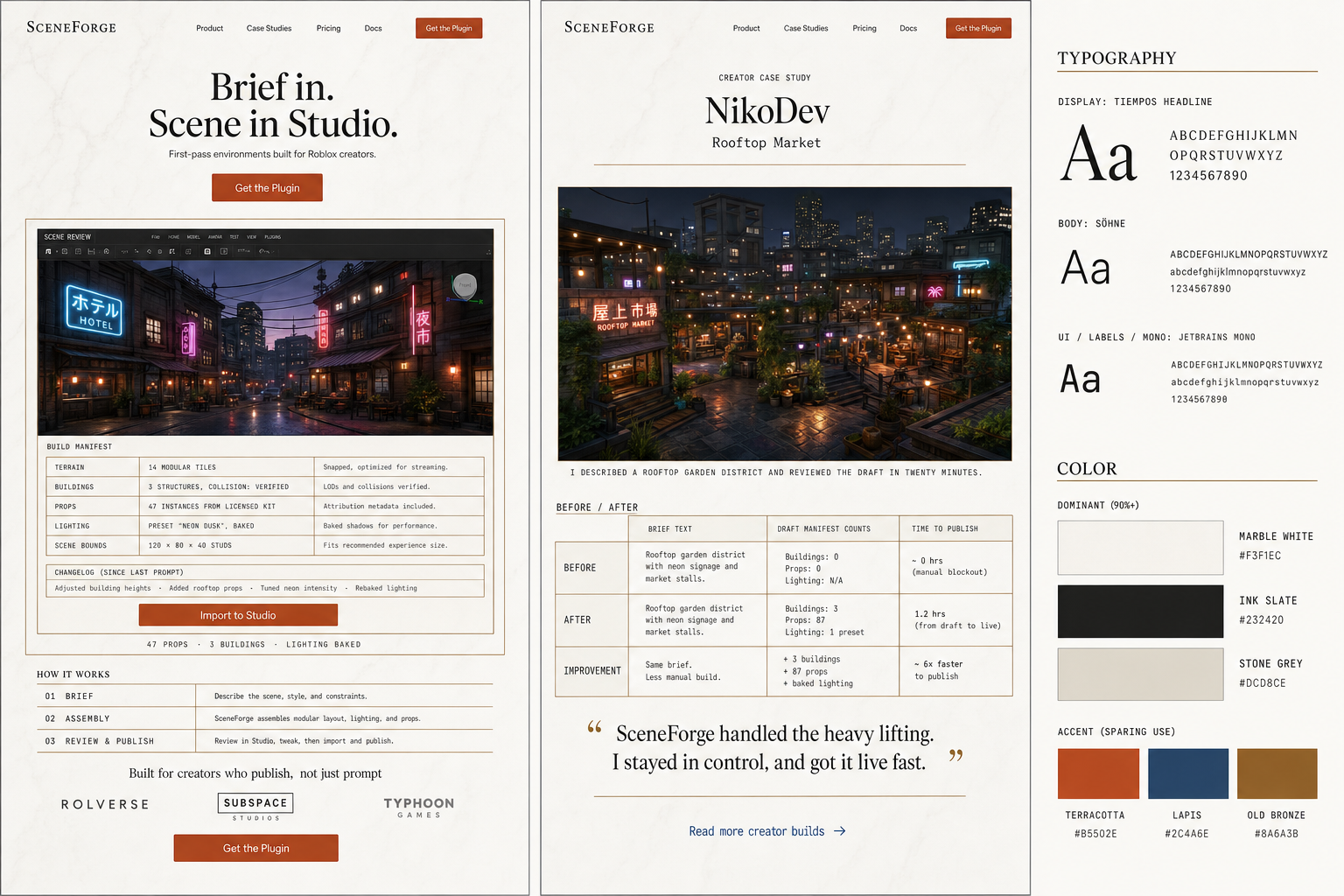
SceneForge turns a text brief (plus optional moodboard images) into a ready-to-import Roblox environment — terrain, buildings, props, and lighting — delivered straight into Roblox Studio via a plugin, where the creator reviews, tweaks, and publishes. It's a Creative Artifact Generator (the output is a playable scene, not advice) paired with a Human-in-the-Loop Copilot review pass inside the actual engine.
How it works
- Creator writes a brief ("cyberpunk noodle-shop alley, neon signage, 3 explorable buildings") and optionally drops in reference images.
- SceneForge's agent plans a layout, selects/generates modular props and materials from a curated, licensing-cleared kit library, and assembles a full scene with correct scale, collision, and lighting baked in.
- The draft lands directly inside Roblox Studio through a plugin — not a raw file export — so the creator can walk through it, drag pieces around, swap materials, and approve/publish exactly like reviewing a human artist's first pass.
- Iteration is prompt-based ("make the alley narrower," "swap neon for daylight") plus direct in-Studio editing, so creators stay the author of record.
MVP scope
- Single platform focus: Roblox only (largest UGC creator base, documented Studio plugin API).
- Single input mode: text brief + optional moodboard image.
- Output: one cohesive scene (not isolated props) imported via plugin, built from a modular, pre-cleared asset/style library assembled with AI-driven layout and texture generation — avoiding the reliability issues of free-form mesh generation.
- Review UI: in-Studio checklist/diff view highlighting what SceneForge built and why, so review is fast and trustworthy.
Why now
Agentic models (Opus 5-class long-running agents, Gemini 3.7 Flash as a cheap agent workhorse) finally make multi-step scene planning + asset selection + placement reliable enough to hand a creator a coherent first draft rather than disconnected pieces — a capability gap that didn't reliably exist six months ago.
Unique selling points
- Delivers a finished, cohesive environment, not single assets — closing the "kit-bashing tedium" gap that generic 3D-asset generators leave open.
- Publishes natively into the creator's existing tool (Roblox Studio) instead of an export they have to wrangle — removing pipeline friction.
- Human-in-the-loop review keeps creators as accountable publishers, addressing quality/trust concerns that block full-auto content tools in UGC platforms.
Path to scale
Start with Roblox indie creators and small studios; expand to Fortnite UEFN and VRChat once the layout-and-review pattern is validated, and later add a monitoring layer (trending styles, popular asset categories) to keep briefs aligned with what's currently engaging players.