EchoRead
Concept
EchoRead is a voice-first AI reading coach for K-3 students. A child opens a tablet or laptop, picks a leveled passage, and reads aloud to a warm, expressive, ultra-low-latency voice agent. The AI listens patiently, offers a gentle phonetic hint only when a child stalls, and never interrupts natural reading flow — made possible by newly available ultrafast, expressive voice model infrastructure that finally makes real-time spoken interaction with a child feel natural instead of robotic or laggy.
Why voice-first
Early readers can't type, and the entire diagnostic value is in spoken fluency — pacing, self-correction, mispronunciation, hesitation. Any text-based UI would either be unusable by the child or would destroy the exact signal being measured. Voice isn't a feature here, it's the only viable interface.
Data refinery layer
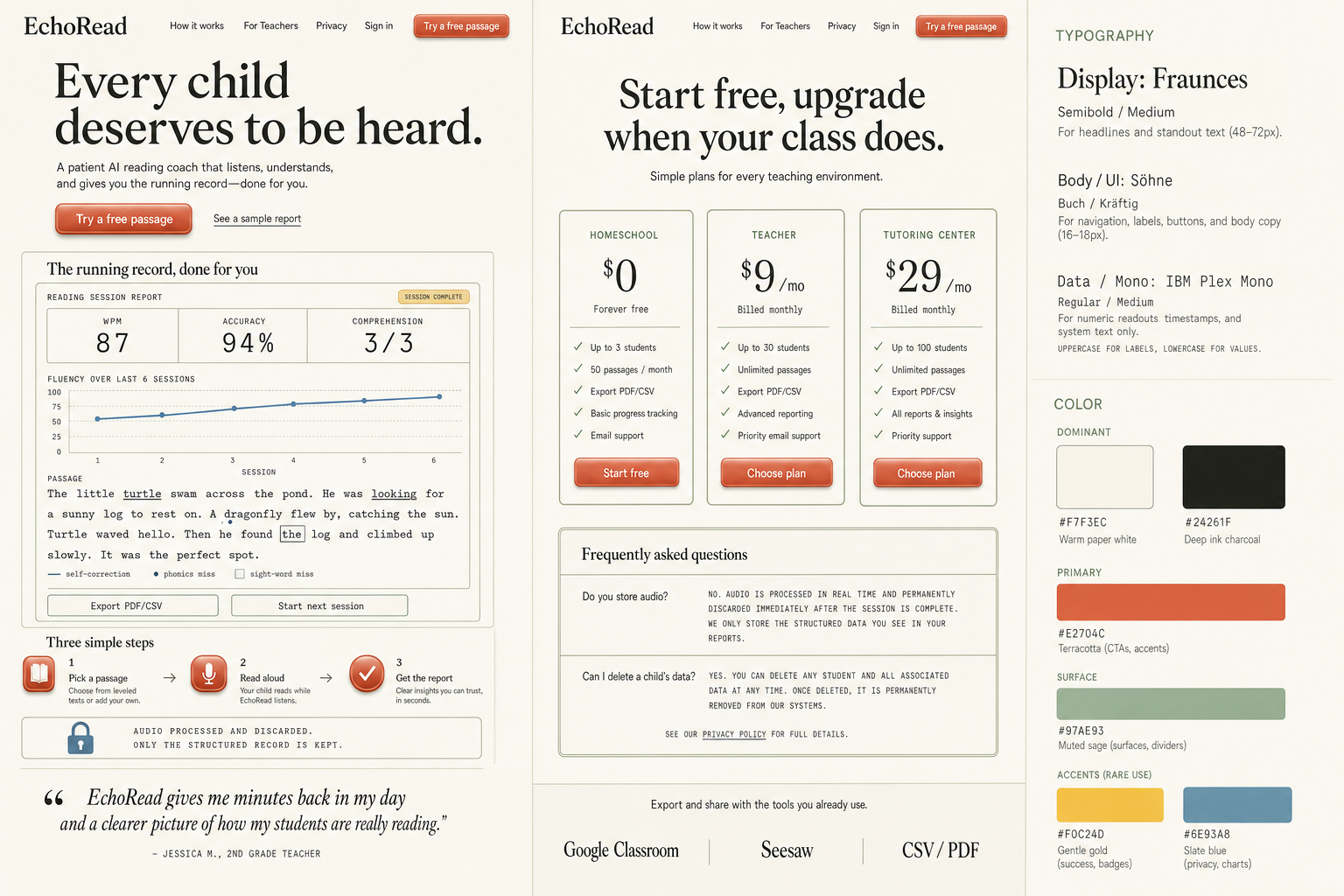
Every reading session — messy, imperfect, spoken — is automatically converted into a clean structured record:
- Words-per-minute and accuracy percentage
- Categorized error types (phonics gaps, sight-word misses, self-corrections)
- A simple comprehension check via 2-3 spoken follow-up questions, scored automatically
- Session-over-session progress trend per child
These structured "digital running records" export as CSV/PDF or sync into tools teachers and tutoring centers already use (Google Classroom, Seesaw), replacing a task that today takes a teacher 15-20 manual minutes per child and typically happens only once every several weeks.
MVP
A single web app, no district integration required:
- Child selects/reads a leveled passage aloud into the browser mic.
- Voice agent (built on ultrafast/expressive model APIs) provides real-time gentle scaffolding only when needed.
- On session end, teacher/parent dashboard shows the structured fluency report and trend line.
- Zero-retention audio policy by default — audio is processed and discarded, only structured data is stored — a critical trust feature for a product used by children.
Initial go-to-market: individual K-3 teachers, reading tutors, and homeschool parents (self-serve, no procurement cycle), expanding later to tutoring centers and small schools.
Unique selling points
- Solves a specific, well-known, painful diagnostic task (running records) rather than being a generic AI tutor
- Leverages this month's leap in voice latency/expressiveness — a capability gap that closes now, not six months ago
- Produces a durable, structured longitudinal dataset per child that becomes the long-term moat
- Privacy-first architecture (no audio retention) tailored to a vertical where parents and schools are highly sensitive about children's data